


As educators, we know that no two students learn in the exact same way. Some excel in reasoning, others thrive in hands-on activities, while a few respond more to emotional and social connections. To teach effectively, we must understand the four learning domains—cognitive, affective, psychomotor, and social—and match them with the right teaching methods.
This guide explores each domain in detail, highlighting teaching verbs and practical strategies you can use in your classroom to make learning both inclusive and impactful.
I. Cognitive Domain
The cognitive domain focuses on intellectual growth and knowledge acquisition. It involves how students think, process, and apply information.

Levels of Cognitive Learning
The cognitive domain has six progressive levels, moving from simple recall of facts to higher-order thinking skills like evaluation and creation. Below is a teacher-friendly breakdown of each level, with verbs and classroom methods you can apply.
1. Remembering
This is the foundation of cognitive learning. It involves recalling, defining, or identifying information that students have learned before. At this level, students are simply retrieving knowledge from memory without necessarily understanding it.
- Typical Verbs: define, list, state, recall, identify, label, name, recognize, repeat.
- Teaching Methods: Flashcards, Repetition, Mnemonics.
- Examples:
- “Define photosynthesis.”
- “State the capital of Lagos State.”
- “List the parts of the human skeleton.”
2. Understanding
At this stage, students go beyond memorization. They interpret, explain, or summarize information in their own words, showing that they grasp its meaning.
- Typical Verbs: explain, describe, interpret, summarize, discuss, classify, paraphrase.
- Teaching Methods: Discussions, Concept Mapping, Analogies.
- Examples:
- “Explain the importance of crop rotation.”
- “Summarize the main idea of the passage.”
- “Classify animals into vertebrates and invertebrates.”
3. Applying
Here, students take what they know and use it in new situations. It’s about putting learning into practice through problem-solving and demonstrations.
- Typical Verbs: apply, use, demonstrate, calculate, solve, practice, illustrate.
- Teaching Methods: Hands-on Activities, Experiments, Problem-Solving.
- Examples:
- “Use a formula to calculate simple interest.”
- “Demonstrate proper handwashing steps.”
- “Solve a word problem involving fractions.”
4. Analyzing
This level requires students to break down information into smaller parts to see how they relate. They compare, contrast, and look for cause-and-effect relationships.
- Typical Verbs: analyze, compare, contrast, differentiate, examine, organize, categorize.
- Teaching Methods: Case Studies, Socratic Seminars, Data Analysis.
- Examples:
- “Compare the characteristics of mammals and reptiles.”
- “Analyze the causes of water pollution in Nigeria.”
- “Organize the events leading to Nigeria’s independence.”
5. Evaluating
Students now make judgments based on criteria and evidence. They assess, critique, and give reasoned arguments for or against something.
- Typical Verbs: evaluate, assess, judge, critique, justify, recommend, defend.
- Teaching Methods: Debates, Peer Review, Self-Assessment.
- Examples:
- “Judge the effectiveness of the government’s health policy.”
- “Critique a fellow student’s essay.”
- “Defend your position on renewable energy.”
6. Creating
This is the highest level of cognitive learning. Students combine knowledge and skills to produce something new and original, such as a design, solution, or project.
- Typical Verbs: create, design, generate, develop, invent, construct, compose.
- Teaching Methods: Projects, Presentations, Role-Playing.
- Examples:
- “Design a poster on the dangers of drug abuse.”
- “Compose a short poem about unity.”
- “Develop a business plan for a small community shop.”
💡 Teacher’s Note: Each level builds on the one before it. For effective lesson planning, move students gradually—from remembering facts to creating and evaluating ideas.
II. Affective Domain
The affective domain deals with students’ emotions, values, and attitudes. It helps them develop respect, empathy, and positive relationships.

Levels of Affective Learning
The affective domain focuses on feelings, values, attitudes, and emotions. It moves from simply paying attention to developing strong values that guide behavior.
1. Receiving
This is the entry point of the affective domain. Students are simply aware and willing to listen or pay attention to new ideas, experiences, or instructions.
- Typical Verbs: attend, notice, listen, show interest, be aware.
- Teaching Methods: Storytelling, Listening Activities, Videos.
- Examples:
- “Listen attentively to a guest speaker.”
- “Show interest during a cultural presentation.”
2. Responding
At this stage, students actively participate by reacting, answering, or showing engagement with what they learned.
- Typical Verbs: participate, respond, practice, show, comply, discuss.
- Teaching Methods: Question-and-Answer, Singing, Group Work.
- Examples:
- “Join in a class debate on honesty.”
- “Answer questions during a Bible club session.”
3. Valuing
Here, students begin to see worth in ideas or behaviors. They not only respond but also accept and appreciate certain values.
- Typical Verbs: appreciate, support, respect, accept, prefer, express.
- Teaching Methods: Role-Playing, Service Projects, Journals.
- Examples:
- “Express respect for different cultures.”
- “Support a class decision to keep the school compound clean.”
4. Organizing
At this level, students integrate different values and arrange them into a consistent system that guides their actions.
- Typical Verbs: organize, compare, balance, synthesize, prioritize.
- Teaching Methods: Debates, Ethical Dilemmas, Group Discussions.
- Examples:
- “Prioritize honesty over personal gain.”
- “Organize values around environmental care and social responsibility.”
5. Characterizing
This is the highest affective stage. Students live by their values consistently, making them part of their character and daily behavior.
- Typical Verbs: act, practice, internalize, live by, demonstrate, influence.
- Teaching Methods: Service Learning, Mentorship, Peer Modeling.
- Examples:
- “Consistently demonstrate fairness in sports.”
- “Live by honesty in all school activities.”
III. Psychomotor Domain
The psychomotor domain focuses on physical skills, coordination, and movement. It’s about helping students refine abilities through practice and performance.

Levels of Psychomotor Learning
The psychomotor domain progresses in 5 stages from simple imitation to mastery and creativity in performance.
1. Imitation
Here, students observe and copy an action demonstrated by the teacher or peers.
- Typical Verbs: imitate, copy, follow, repeat, observe.
- Teaching Methods: Demonstration, Guided Practice, Modeling.
- Examples:
- “Copy the steps of a traditional dance.”
- “Imitate a teacher while writing cursive letters.”
2. Manipulation
At this stage, students practice and adjust the skill with some level of confidence, even without step-by-step guidance.
- Typical Verbs: manipulate, perform, execute, demonstrate, practice.
- Teaching Methods: Drills, Repetition, Practice Exercises.
- Examples:
- “Perform simple arithmetic on the abacus.”
- “Manipulate clay to form basic shapes.”
3. Precision
Students now perform the skill accurately, neatly, and without mistakes. Control and coordination are visible.
- Typical Verbs: refine, execute, perform accurately, perfect.
- Teaching Methods: Skill Testing, Feedback, Timed Drills.
- Examples:
- “Write neatly within the lines of an exercise book.”
- “Perform a science experiment without spilling.”
4. Articulation
Here, students combine multiple skills smoothly and efficiently. Movements or tasks are linked together in a coordinated way.
- Typical Verbs: integrate, combine, coordinate, adapt.
- Teaching Methods: Projects, Team Activities, Complex Performances.
- Examples:
- “Coordinate dance steps with drum beats.”
- “Integrate typing and formatting skills to create a document.”
5. Naturalization
At the highest psychomotor stage, students master the skill to the point it becomes automatic and creative. They can innovate and perform naturally.
- Typical Verbs: master, design, create, innovate, perform naturally.
- Teaching Methods: Performance, Innovation Challenges, Mastery Projects.
- Examples:
- “Create a unique artwork using mixed materials.”
- “Master playing a musical instrument.”
IV. Social Domain or Inter-personal Domain
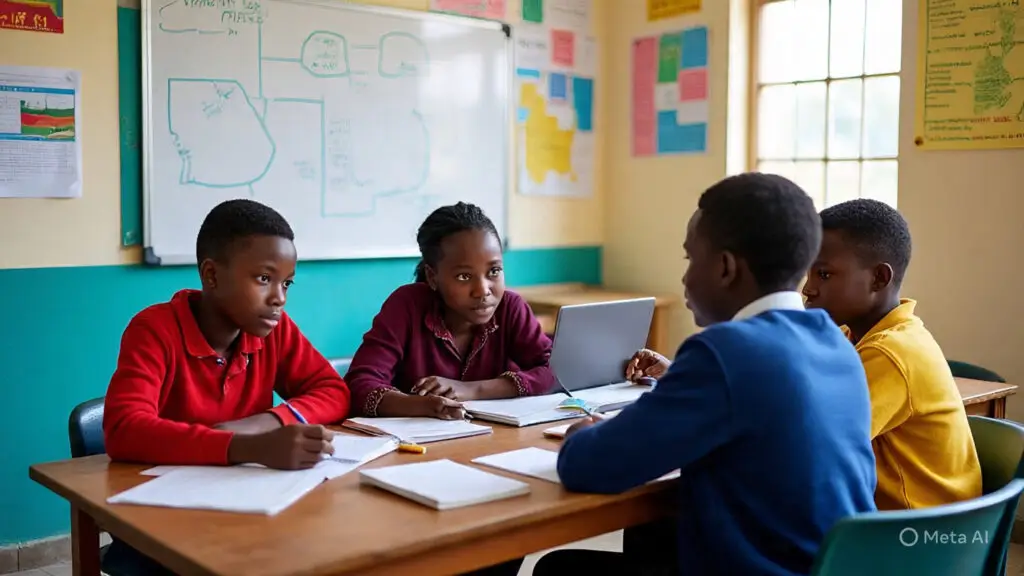
The social domain emphasizes teamwork, collaboration, and communication—skills students need to succeed in life beyond school.
Core Areas of Social Learning
The social domain develops from basic awareness of others to leadership and teamwork.
1. Recognition of Others
Students start by simply noticing and acknowledging others in social settings.
- Typical Verbs: notice, recognize, greet, acknowledge.
- Teaching Methods: Icebreakers, Group Introductions, Pair Work.
- Examples:
- “Greet classmates politely.”
- “Recognize the contributions of others in a discussion.”
2. Participation
At this stage, students actively take part in group activities and share responsibilities.
- Typical Verbs: participate, share, cooperate, join, collaborate.
- Teaching Methods: Cooperative Learning, Games, Group Projects.
- Examples:
- “Join in group cleaning of the classroom.”
- “Share ideas during teamwork.”
3. Cooperation
Students now learn to work smoothly with others, resolving conflicts and promoting group success.
- Typical Verbs: cooperate, support, mediate, encourage, contribute.
- Teaching Methods: Group Problem-Solving, Peer Tutoring, Conflict Resolution.
- Examples:
- “Encourage teammates during sports.”
- “Support peers who are struggling in a task.”
4. Leadership
At this level, students take initiative and guide others towards achieving common goals.
- Typical Verbs: lead, organize, coordinate, motivate, influence.
- Teaching Methods: Group Leadership Roles, Class Prefect Duties, Peer Mentoring.
- Examples:
- “Organize a study group for revision.”
- “Motivate classmates to join a cultural dance.”
5. Responsibility
This is the highest social stage. Students consistently show accountability, fairness, and commitment to the welfare of others and the community.
- Typical Verbs: take responsibility, uphold, commit, model, demonstrate.
- Teaching Methods: Community Service, Mentorship, Long-Term Projects.
- Examples:
- “Take responsibility for maintaining class cleanliness.”
- “Model fairness as a team leader.”
💡 Tip for Teachers: Classroom projects that require teamwork and leadership roles help learners develop responsibility and empathy.

Conclusion
By recognizing and applying the four learning domains in instructional Objectives and teaching, teachers can design lessons that go beyond academics. Cognitive objectives sharpen thinking, affective objectives shape values, psychomotor objectives develop skills, and social objectives strengthen teamwork.
When lessons touch on all four domains, students become not only knowledgeable but also responsible, skilled, and socially aware individuals—a true picture of holistic education.




Community Join the conversation Open discussion +