

Class: Senior Secondary School 2 (SS2 / SSS2)
Term: Second Term
Week: 10
Age: 16 years
Duration: 45 minutes
Subject: Civic Education
Curriculum Theme: Responsible Citizenship
Previous Lesson: Responsible Parenthood: Importance and Social Benefits.
Topic: TRAFFIC REGULATION
Subject Matter: Meaning of traffic regulation, traffic regulations (examples: obeying traffic officials and signs, avoiding over speeding)
Specific Objectives
By the end of the lesson, pupils should be able to:
Cognitive Domain:
- Define traffic regulation.
- Identify various traffic regulations.
Affective Domain:
- Appreciate the importance of obeying traffic regulations.
- Discuss the consequences of disobeying traffic rules.
Psychomotor Domain:
- Demonstrate how to obey traffic officials and signs.
- Practise safe road usage in their daily lives.
Social Domain:
- Promote awareness about traffic safety among peers and in their communities.
- Collaborate in discussing solutions to common road safety challenges.
Reference Materials
The following resources were used in planning this lesson:
- Senior Secondary Schools Education Curriculum
- State Unified Scheme of Work
- Macmillan Civic Education for Senior Secondary Schools 2
- https://www.frsc.gov.ng/regulations/
- https://www.nigerianlawguru.com/articles/traffic%20laws/NIGERIAN%20TRAFFIC%20OFFENCES%20AND%20PENALTIES.pdf
Instructional Materials
The teacher will teach this lesson with the aid of:
- Newspaper articles and magazines showing road accidents or traffic situations.
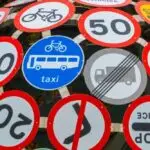
- Charts displaying common traffic signs.
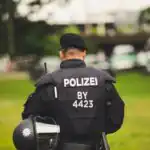
- Pictures of traffic officials (e.g., FRSC, Police).
Rationale for the Lesson
This lesson helps pupils understand the rules governing road usage, which is important for preventing accidents and ensuring safety. It enables them to become responsible road users and contribute to order and peace in society.
Prerequisite/Previous Knowledge
Pupils have basic knowledge of roads, vehicles, and some common road signs from their daily experiences.
Lesson Content/Board Summary
TRAFFIC REGULATION
Meaning of Traffic Regulation
Traffic regulation refers to the rules and laws put in place by authorities to control the movement of vehicles, pedestrians, and other road users. These rules are designed to ensure safety, maintain order, and facilitate the smooth flow of traffic on roads.
Examples of Traffic Regulations
The following are common traffic regulations:
- Obeying Traffic Officials: Drivers and pedestrians must always obey instructions given by traffic wardens, police officers, or Federal Road Safety Corps (FRSC) officials.
- Obeying Traffic Lights: Stop at red lights, prepare to move at amber lights, and proceed at green lights.
- Obeying Road Signs: Drivers and pedestrians must understand and obey all road signs, which provide warnings, guidance, and regulatory information.
- Avoiding Over Speeding: Drivers must drive within the stipulated speed limits to prevent loss of control and reduce the severity of accidents.
- Using Seat Belts: Drivers and passengers must wear seat belts for their safety.
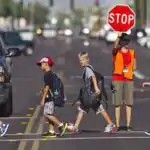
- Using Pedestrian Crossings: Pedestrians should use designated zebra crossings or overhead bridges to cross the road safely.
- Avoiding Driving Under Influence: It is illegal and dangerous to drive after consuming alcohol or drugs.
- No Use of Mobile Phones While Driving: Drivers should not use handheld mobile phones while operating a vehicle.
- Proper Vehicle Maintenance: Vehicles must be in good working condition, with functional brakes, lights, and tires.
- Respecting Right-of-Way: Drivers and pedestrians must yield to others when appropriate, especially at intersections or roundabouts.
Importance of Obeying Traffic Regulations
Obeying traffic regulations is important for several reasons:
- It helps to prevent road accidents and save lives.
- It ensures the smooth and orderly flow of traffic.
- It protects lives and property of road users.
- It reduces traffic congestion and travel time.
- It promotes discipline and responsible behaviour on the roads.
- It reduces environmental pollution caused by idling vehicles in traffic jams.
Teaching Methods/Instructional Techniques
Discussion, Lecture, Demonstration, Question and Answer, Visual Aids
Instructional Procedures
Step 1: Introduction
Time: 5 minutes
Teaching Skill: Set Induction
Teacher’s Activity: The teacher greets the pupils and asks them to share their experiences or observations about road usage and traffic in their communities.
Pupils’ Activity: Pupils respond by sharing their observations about traffic and road safety.
Learning Point: Pupils connect their personal experiences to the topic of traffic regulation.
Step 2: Explanation of Traffic Regulation
Time: 10 minutes
Teaching Skill: Explanation/Definition
Teacher’s Activity: The teacher explains the meaning of traffic regulation, emphasizing its purpose in ensuring safety and order on the roads. The teacher writes the definition on the board.
Pupils’ Activity: Pupils listen attentively, ask questions for clarification, and copy the definition into their notes.
Learning Point: Pupils understand the definition and purpose of traffic regulation.
Step 3: Identification of Traffic Officials and Signs
Time: 10 minutes
Teaching Skill: Visual Aid/Identification
Teacher’s Activity: The teacher uses charts and pictures to show different traffic officials (FRSC, Police) and common road signs (e.g., stop, yield, no parking, pedestrian crossing). The teacher discusses their roles and meanings.
Pupils’ Activity: Pupils identify the officials and signs, state their meanings, and ask questions.
Learning Point: Pupils recognize traffic officials and understand the messages conveyed by various road signs.
Step 4: Discussion of Specific Traffic Regulations
Time: 10 minutes
Teaching Skill: Discussion/Examples
Teacher’s Activity: The teacher guides pupils to discuss various traffic regulations, such as obeying traffic lights, avoiding over speeding, using seat belts, and using pedestrian crossings. The teacher uses newspaper articles or magazines to highlight real-life scenarios.
Pupils’ Activity: Pupils mention and discuss examples of traffic regulations, relating them to the visual aids and their daily observations.
Learning Point: Pupils learn about specific traffic rules and their practical application.
Step 5: Importance of Obeying Traffic Regulations
Time: 5 minutes
Teaching Skill: Questioning/Analysis
Teacher’s Activity: The teacher leads a discussion on why obeying traffic rules is important, focusing on how it prevents accidents, ensures safety, and maintains order. The teacher encourages pupils to share their views.
Pupils’ Activity: Pupils discuss the importance of obeying traffic regulations, explaining how it contributes to preventing accidents and ensuring smooth traffic flow.
Learning Point: Pupils understand the benefits and necessity of complying with traffic rules.
Step 6: Practical Application/Scenarios
Time: 5 minutes
Teaching Skill: Problem-Solving
Teacher’s Activity: The teacher presents short scenarios (e.g., a child crossing a busy road, a driver ignoring a red light) and asks pupils to suggest the correct and safe actions based on traffic regulations.
Pupils’ Activity: Pupils suggest appropriate actions for each scenario, demonstrating their understanding of traffic rules.
Learning Point: Pupils apply their knowledge of traffic regulations to practical situations.
Step 7: Evaluation/Review
Time: 5 minutes
Teaching Skill: Questioning/Assessment
Teacher’s Activity: The teacher evaluates the learning by asking the following questions:
- What is traffic regulation?
- Mention four examples of traffic regulations.
- State two reasons why it is important to obey traffic regulations.
- Identify two traffic officials you know.
Pupils’ Activity: Pupils answer orally and in writing.
Learning Point: Pupils demonstrate understanding of the lesson.
Step 8: Conclusion
Time: 2 minutes
Teaching Skill: Summarization
Teacher’s Activity: The teacher summarizes the key points of the lesson, emphasizing the importance of responsible road usage. The teacher assigns homework: “List five traffic signs you commonly see and explain their meanings.”
Pupils’ Activity: Pupils listen to the summary and copy the homework.
Learning Point: Pupils reinforce their understanding and prepare for further learning.
Lesson Keywords
- Traffic Regulation – Rules and laws governing the movement of road users.
- Traffic Official – Persons authorized to enforce traffic laws (e.g., FRSC, Police).
- Road Signs – Visual symbols providing information, warnings, or instructions to road users.
- Seat Belts – Safety devices designed to secure occupants in a vehicle during a collision.
- Pedestrian Crossing – A designated area for pedestrians to cross the road safely.
- Over Speeding – Driving a vehicle faster than the legally permitted speed limit.
- Accident – An unforeseen and undesirable event, especially one causing injury or damage.
Differentiation
For pupils who grasp concepts quickly, the teacher can ask them to research more complex traffic laws or the roles of different agencies in traffic management. For pupils who need more support, the teacher can provide simplified diagrams of traffic signs and a checklist of basic rules to remember.
Note for teachers using this lesson plan
Teachers should encourage pupils to share real-life examples of traffic situations they have observed. Using local examples and illustrations will make the lesson more relatable and engaging. Emphasize that traffic regulations apply to both drivers and pedestrians. A short video clip on road safety could be used if resources permit.
Community Join the conversation Open discussion +