

Note for teachers using this lesson plan
This lesson introduces JSS 1 students to the fundamental differences between Alternating Current (AC) and Direct Current (DC) power, which is essential for understanding solar PV systems. Prepare visual aids like diagrams of AC/DC waveforms or pictures of appliances that use each type of power. Emphasize safety precautions when discussing electricity. By the end of the lesson, students should be able to clearly distinguish between AC and DC power and identify common applications for each.
Class: JSS 1
Term: First Term
Week: 5
Age: 12 years
Duration: 45 minutes
Subject: Solar PV Installation and Maintenance
Curriculum Theme: Solar Photovoltaics System for Electricity Generation
Focal competence: Demonstrate the knowledge of Solar Photovoltaics System and safety precautions
Key competencies/values: Communication; Collaboration; ICT and Digital Competencies
Skills:
- Using name plates of appliances, functions or power source to determine their category of load
Previous Lesson: Types and Characteristics of Electrical Loads
Topic: Electrical Appliances Power Load/Loads Sizing: Differences Between The Two Forms Of Power (Ac
Subject Matter: Difference the two forms of power (AC and DC)
Specific Objectives
By the end of the lesson, pupils/students should be able to:
Cognitive Domain
- Differentiate between AC and DC Power.
- Explain the basic characteristics of AC and DC power.
Affective Domain
- Appreciate the importance of understanding AC and DC power in daily life and solar PV systems.
Psychomotor Domain
- Identify common electrical appliances that use AC power.
- Identify common electrical appliances that use DC power.
Reference Materials
The following resources were used in planning this lesson:
- 2025 Revised 9 Years Basic Education Curriculum
- Relevant State Unified Scheme of Work
- Basic Electricity and Solar PV Installation Textbook for JSS 1
- The HeadTeacher Scheme of work
Instructional Materials
The teacher will teach this lesson with the aid of:
- Approved curriculum resource/material
- Charts showing AC and DC waveforms
- Pictures or actual examples of appliances that use AC (e.g., fan, TV) and DC (e.g., phone charger, battery-operated toy)
- Whiteboard/Chalkboard
- Markers/Chalk
Rationale for the Lesson
Understanding the difference between AC and DC power is foundational for anyone working with electricity, especially in solar PV installation. This lesson equips students with the basic knowledge required to correctly identify power sources and appliance requirements, which is crucial for safe and efficient electrical system design and maintenance. It also lays the groundwork for more advanced topics in solar energy.
Prerequisite/Previous Knowledge
Students should have a basic understanding of what electricity is and that it makes appliances work. They should also be familiar with common electrical appliances found in homes.
Lesson Content/Board Summary
Electrical Appliances Power Load/Loads Sizing: Differences Between The Two Forms Of Power (AC and DC)
Understanding Alternating Current (AC) Power
Alternating Current (AC) is a type of electrical current where the flow of electric charge periodically reverses direction. This means the voltage level also reverses with the current. AC is the most common form of electricity supplied to homes and businesses through power outlets.
Characteristics of AC power:
- The direction of current flow changes regularly.
- It can be easily transformed to higher or lower voltages using transformers.
- It can be transmitted over long distances with minimal power loss.
- The frequency of AC in Nigeria is typically 50 Hertz (Hz), meaning the current changes direction 50 times per second.
Understanding Direct Current (DC) Power
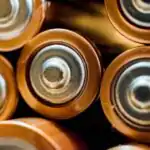
Direct Current (DC) is a type of electrical current where the flow of electric charge is always in one direction. The voltage remains constant in polarity. DC power is commonly found in batteries, solar panels, and electronic devices.
Characteristics of DC power:
- The current flows in a single, constant direction.
- It is typically used for low-voltage applications.
- It cannot be easily transformed to different voltage levels without complex electronic circuits.
- It is the type of power generated directly by solar panels and stored in batteries.
Key Differences Between AC and DC Power
The main differences between AC and DC power are:
- Direction of Flow: AC changes direction periodically, while DC flows in one constant direction.
- Voltage Transformation: AC voltage can be easily stepped up or down using transformers, whereas DC voltage transformation is more complex.
- Transmission: AC is more efficient for long-distance transmission, while DC is better for short distances or specific electronic applications.
- Sources: AC is generated by power stations and supplied via wall outlets. DC is generated by batteries, solar panels, and rectifiers.
- Applications: AC powers most household appliances and industrial machinery. DC powers electronic devices, batteries, and solar PV systems.
Examples of Appliances Using AC and DC Power
It is important to know which appliances use AC or DC power for proper connection and safety. Some appliances use AC directly, while others convert AC to DC internally or use DC from a battery.
Appliances that typically use AC power:
- Television sets
- Refrigerators
- Electric fans
- Washing machines
- Light bulbs (many types)
Appliances that typically use DC power (often from batteries or after conversion from AC):
- Mobile phones (use DC from charger or battery)
- Laptops (use DC from adapter or battery)
- Remote controls
- Flashlights
- Solar-powered devices
- Car batteries
Teaching Methods/Instructional Techniques
Discussion, Demonstration, Question and Answer, Explanation, Observation, Practical Activity
Instructional Procedures
Step 1: Introduction
Time: 5 minutes
Teaching Skill: Activating prior knowledge
Teacher’s Activity: The teacher greets the students and asks them to recall what electricity is and how it makes appliances work. The teacher then introduces the topic by explaining that electricity comes in different forms, which we will learn about today.
Pupils’ Activity: Students respond to questions about electricity and listen attentively to the introduction.
Learning Point: Basic electricity recall
Step 2: Introduction to AC Power
Time: 8 minutes
Teaching Skill: Explanation/Demonstration
Teacher’s Activity: The teacher explains what Alternating Current (AC) is, using simple language and showing a diagram of an AC waveform. The teacher also gives examples of common household appliances that use AC power and explains that AC is what comes from wall sockets.
Pupils’ Activity: Students listen, observe the diagrams, and ask questions for clarification.
Learning Point: Understanding AC current
Step 3: Introduction to DC Power
Time: 8 minutes
Teaching Skill: Explanation/Demonstration
Teacher’s Activity: The teacher explains what Direct Current (DC) is, showing a diagram of a DC waveform. The teacher provides examples of devices that use DC power, such as batteries and solar panels, highlighting that DC flows in one direction.
Pupils’ Activity: Students listen, observe the diagrams, and identify differences from AC based on the explanation.
Learning Point: Understanding DC current
Step 4: Differentiating AC and DC Power
Time: 8 minutes
Teaching Skill: Guided Discussion/Comparison
Teacher’s Activity: The teacher guides students to compare and contrast AC and DC power based on their characteristics (direction of flow, voltage transformation, transmission). The teacher uses a comparison chart or board summary points to highlight the key differences.
Pupils’ Activity: Students participate in the discussion, identifying differences and asking questions.
Learning Point: AC vs. DC differences
Step 5: Identifying AC Appliances
Time: 4 minutes
Teaching Skill: Identification/Practical Application
Teacher’s Activity: The teacher shows pictures or actual examples of common AC appliances (e.g., fan, TV, refrigerator) and asks students to identify them and state why they use AC power (e.g., plug into wall socket).
Pupils’ Activity: Students identify the appliances and explain their AC power usage.
Learning Point: AC appliance identification
Step 6: Identifying DC Appliances
Time: 4 minutes
Teaching Skill: Identification/Practical Application
Teacher’s Activity: The teacher shows pictures or actual examples of common DC appliances (e.g., phone, laptop, remote control, solar lamp) and asks students to identify them and explain their DC power usage (e.g., use batteries, charger converts AC to DC).
Pupils’ Activity: Students identify the appliances and explain their DC power usage.
Learning Point: DC appliance identification
Step 7: Evaluation/Review
Time: 5 minutes
Teaching Skill: Questioning/Assessment
Teacher’s Activity: The teacher evaluates the learning by asking the following questions:
- What is the main difference in how AC and DC current flow?
- Give two examples of appliances that use AC power.
- Give two examples of devices that use DC power.
- Why is understanding AC and DC important in solar PV?
Pupils’ Activity: Pupils answer orally and in writing.
Learning Point: AC/DC differentiation assessment
Step 8: Note-Taking
Time: 4 minutes
Teaching Skill: Guided Writing
Teacher’s Activity: The teacher guides pupils/students to copy the essential Board Summary notes on the differences between AC and DC power into their notebooks.
Pupils’ Activity: Pupils/students copy the notes carefully into their notebooks.
Learning Point: Recording lesson notes
Step 9: Conclusion
Time: 3 minutes
Teaching Skill: Consolidation
Teacher’s Activity: The teacher briefly summarizes the key differences between AC and DC power, emphasizing their importance in understanding how electrical systems, especially solar PV, operate. The teacher encourages students to observe the power sources of appliances at home.
Pupils’ Activity: Students listen and reflect on the lesson’s main points.
Learning Point: Lesson summary and reinforcement
Continuous Assessment/Further Study
Type: Homework
Instruction: Answer the following questions in your notebook:
- Explain in your own words what Alternating Current (AC) is.
- Explain in your own words what Direct Current (DC) is.
- List three appliances in your home that use AC power.
- List three devices in your home that use DC power (e.g., battery-operated items).
- Why do you think solar panels produce DC power instead of AC power?
Lesson Keywords
- Alternating Current (AC) – Electric current that periodically reverses direction.
- Direct Current (DC) – Electric current that flows in only one direction.
- Voltage – The electrical potential difference between two points.
- Frequency – The number of times an AC current completes a cycle per second (measured in Hertz).
- Solar Panel – A device that converts sunlight directly into DC electricity.
- Battery – A device that stores chemical energy and converts it into DC electricity.
Differentiation
For weaker learners: Provide simplified diagrams and focus on the core concept of “changing direction” vs. “one direction.” Use more concrete examples and allow them to draw simple representations of AC and DC flow. Provide a pre-filled comparison table for them to complete with guidance.
For faster learners: Challenge them to research and explain why AC is preferred for long-distance transmission and why solar panels generate DC. Ask them to identify appliances that convert AC to DC and vice versa.
Suggested Lesson Videos
For further understanding, students can search for videos on YouTube using the following keywords:
https://www.youtube.com/results?search_query=AC+vs+DC+for+kids+JSS1
https://www.youtube.com/results?search_query=difference+between+AC+and+DC+power+for+beginners
Teacher Guide for Using This Lesson Plan
Before the lesson, ensure you have prepared clear diagrams of AC and DC waveforms and collected pictures or actual examples of appliances that use each type of power. Start by engaging students with questions about electricity they already know. When explaining AC and DC, use simple analogies to make the concept concrete, like a swinging pendulum for AC and a river flowing in one direction for DC. Guide students through the comparison, allowing them to contribute examples from their daily lives. Encourage active participation during the identification of appliances. During the note-taking stage (Step 8), ensure students copy the Board Summary accurately. Pay close attention to weaker learners during group activities and provide extra support, while challenging faster learners with additional questions or research tasks. Emphasize the practical relevance of this knowledge for future solar PV studies. Conclude by reiterating the main differences and the importance of understanding them.
Community Join the conversation Open discussion +