


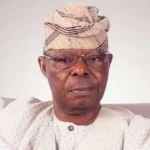
The Bishop of the Diocese of Ife, Church of Nigeria (Anglican Communion), Olubunmi Akinlade, has called for stronger investment in Nigeria’s education sector, warning that focusing only on student funding without adequately supporting lecturers will not resolve the system’s challenges.
He made this appeal during the 3rd Session of the 12th Synod, where he acknowledged recent government efforts to improve access to higher education through the Nigerian Education Loan Fund.
According to him, while billions of naira have been disbursed to support financially disadvantaged students, the impact of such initiatives may remain limited if lecturers continue to work under poor conditions and inadequate funding.
He stated that improving education requires balance across all levels of the system.
“If you fund the students to go to school and the lecturers are underfunded, you have not solved the problem. More has to be done for those who teach the students so that they can deliver quality education,” he said.
The cleric expressed concern about the declining welfare and remuneration of university lecturers in Nigeria, noting that teaching once attracted some of the nation’s most brilliant minds and enjoyed high social respect.
He also highlighted the increasing “brain drain” in the education sector, where many lecturers leave the country in search of better working conditions and higher pay abroad.
To address this trend, he urged the government to improve salary structures, working conditions, and academic infrastructure, while also increasing long-term investment in learning resources.
Akinlade further criticised Nigeria’s education funding level, pointing out that the proposed 2026 budget allocation of 6.1 percent remains far below the 15–20 percent benchmark recommended by UNESCO.
He also called for stronger policies aimed at reducing the number of out-of-school children in the country, stressing the need for consistent and sustained education reforms.
Beyond government efforts, he highlighted the Diocese of Ife’s own contributions to education, including scholarship and bursary programmes for indigent students.
According to him, the diocese currently supports over 30 students at Divine Royal College and provides bursaries for about 10 students in tertiary institutions. The initiative costs between ₦4 million and ₦5 million annually and is open to students regardless of religious background.
He emphasized that financial limitations should never prevent access to education.
“We said money will not deter them from having the education they need,” he added.
Akinlade also appealed to the Osun State Government to return mission schools previously taken over from the church, and to renovate facilities that are currently in poor condition.
He concluded by stressing that meaningful reform in education must combine student support with proper investment in teachers to achieve lasting improvements in learning outcomes.



Community Join the conversation Open discussion +